Metal Cutting
When working with and cutting metal, you need the right tools to achieve a clean, high-quality result. Using the wrong type of saw blade can not only compromise the quality of the cut but also risk damaging both the material and the tool. Increased consumption and reduced service life.
Choosing the Right Saw Blade
Using the wrong type of saw blade for metal cutting can result in damage to both the tool and the material being worked on. Choosing the right saw blade is crucial for achieving the best results. Bi-metal blades, for example, are known for their durability and ability to efficiently cut through both soft and hard metals.
Understanding Saw Blade Characteristics
When cutting metal, it is not only the type of blade that matters, but also knowing when and how to use it. Achieving a good result requires an understanding of the saw blade’s characteristics, such as the number of teeth per inch (TPI) and tooth pitch. These factors directly affect both cutting speed and the quality of the finished cut. The specially designed teeth make it possible to cut through metal pipes and similar materials with ease. Choosing the right saw blade for the specific material and task is therefore essential to achieving the desired results when cutting metal.
A bi-metal blade is made with a tough spring steel backing and cobalt-alloyed high-speed steel (HSS) teeth. This combination creates a blade that is resistant to breakage and highly wear-resistant. These blades are particularly suitable for applications requiring a high degree of flexibility and durability, such as cutting wood with nails, metal, pipes, and demanding demolition work. The combination of two different metals provides a service life up to five times longer than that of blades made entirely of carbon steel. This results in higher productivity.
The Hacksaw – An Essential Tool
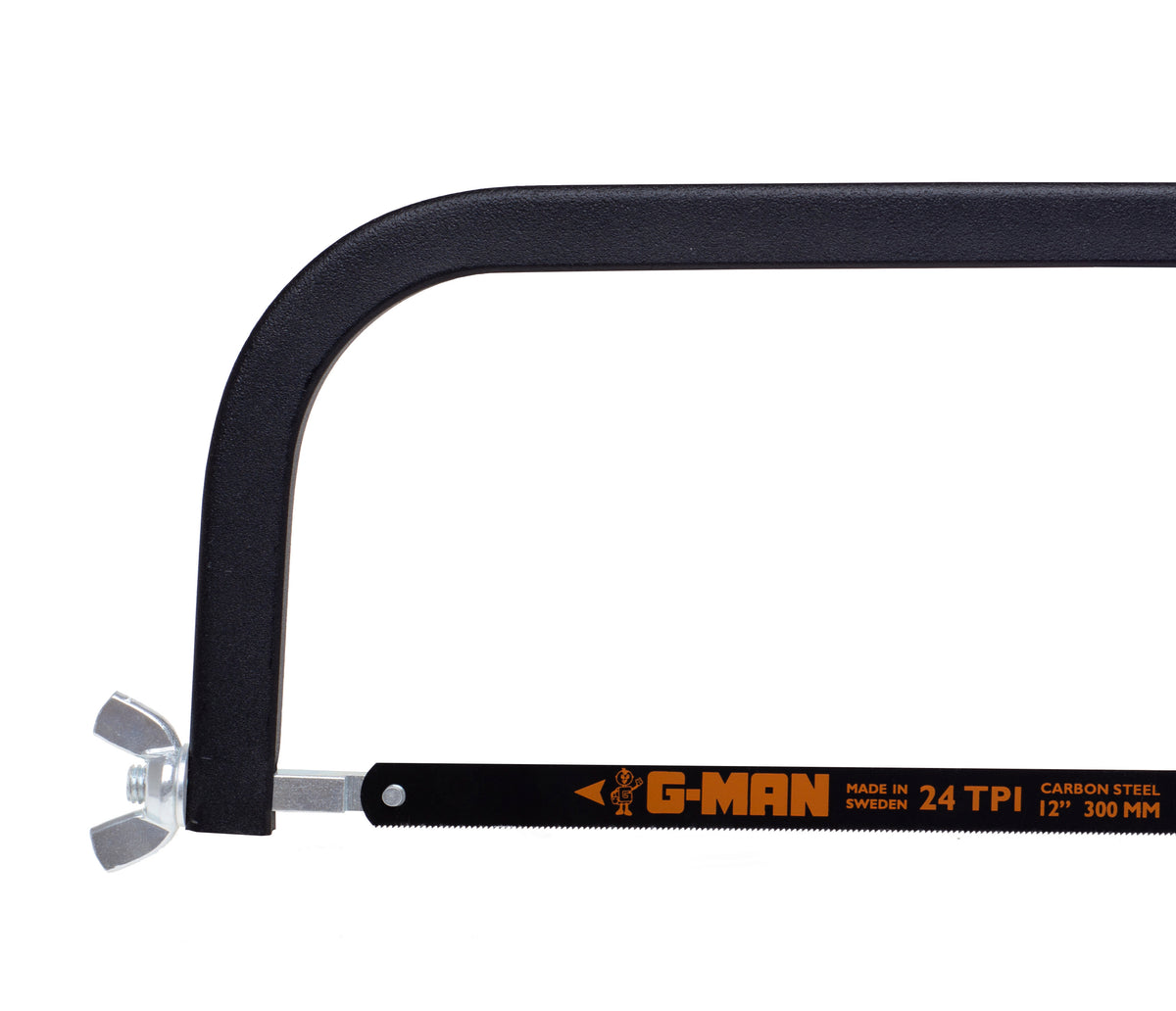
One of the most popular tools for cutting metal is the hacksaw. It is simple, affordable, and accessible to everyone, making it a favourite among both professionals and DIY enthusiasts. Hacksaw blades are available with different tooth configurations to suit various types of metal and cutting applications. Common options include 18, 24, and 32 teeth per inch (TPI), as well as progressive-tooth blades.
An important tip when using a hacksaw is to ensure that the blade is fitted in the correct direction, with the teeth pointing away from the body, so that cutting takes place on the forward stroke. Always check the markings on the blade to ensure it is installed correctly.
G-man Tools
10 Hack Saw
View full details

Jigsaw – For Precision Cutting
Using an electric jigsaw for metal cutting can be a good option when greater precision and flexibility are required. Jigsaw blades are available in various sizes and designs to suit different jigsaws and materials. Since blades can wear out or break during use, it is important to replace them regularly to maintain cutting efficiency and precision.
G-man Tools
2015 Jigsaw Blade Bi-metal 24 TPI
View full details

Reciprocating Saw – Blades for Tough, Abrasive Materials
When cutting metal, it is not only the type of blade that matters, but also knowing when and how to use it. G-MAN Tools offers more than 50 different reciprocating saw blades with varying materials, tooth configurations, lengths, and thicknesses. The range includes blades for pipes and solid materials, thin-walled pipes, heavy-duty pipes such as cast iron pipes, and metal profiles.
G-man Tools
1055 Reciprocating Saw Blade Carbide 8 TPI

Choose the Right Blade for Your Project:
- Higher TPI: More teeth for finer cuts and a slower cutting speed.
- Lower TPI: Fewer teeth for coarser cuts and a faster cutting speed.
- Larger tooth pitch: Ideal for thicker materials and rougher cuts.
- Smaller tooth pitch: Ideal for thinner materials and finer cuts.
By combining the right blade with the correct technique when cutting metal, you can achieve better results.